

Most portfolios do not suffer from a lack of good photographs. They suffer from too many almost-good ones.
That is uncomfortable news because making pictures is emotional. You remember the impossible location, the model who arrived late, the stylist who saved the day and the frame you fought for. An editor sees none of that. They see twenty images and make a quick decision about whether you have a point of view.
A strong fashion photography portfolio is not an archive. It is an argument: this is how I see, this is what I can repeat and this is the kind of team I am ready to join.
Make the purpose clear before call time
Before planning the shoot, decide what it is meant to become. Is the primary goal a magazine editorial, a portfolio story, a client presentation or a personal experiment? A magazine needs a coherent publishable sequence, accurate credits and enough variation for layout. A portfolio shoot can be more targeted: it should demonstrate the kind of work you want to be hired to make again.
If one production needs to do both jobs, choose a primary goal and tell the team. Otherwise the stylist may be building a magazine narrative while the photographer is collecting unrelated hero frames for a book.
State the author’s idea in one or two sentences. It may carry a clear argument, explore a feeling or simply reflect the beauty of a moment. What matters is that every collaborator knows what the camera is looking for.
Decide what you want the portfolio to earn
Before editing, name the next opportunity you want.
Do you want magazine editorials, beauty commissions, lookbooks, campaigns or test shoots with agencies? A portfolio trying to win all of them at once usually becomes vague. You can have range, but the range needs a centre.
Write one private sentence: “I want to be hired for…” Then remove work that actively argues against that sentence. A soft lifestyle image may be lovely, but if you want experimental fashion commissions, it may be occupying the space where a more specific image should live.
Treat the moodboard as a team document
A useful moodboard explains the intended result to everyone involved. Include references for light, colour, styling, beauty, gesture, casting, location and sequence — then add a few words about why each reference is there.
The point is alignment, not imitation. A model should understand the energy, a stylist should understand the silhouette, and the makeup and hair team should understand how polished or imperfect the world needs to feel. When the team shares the same visual language, more of the day can be spent making rather than translating.
Open with confidence, not explanation
The first image should not be a warm-up. It should announce a way of seeing.
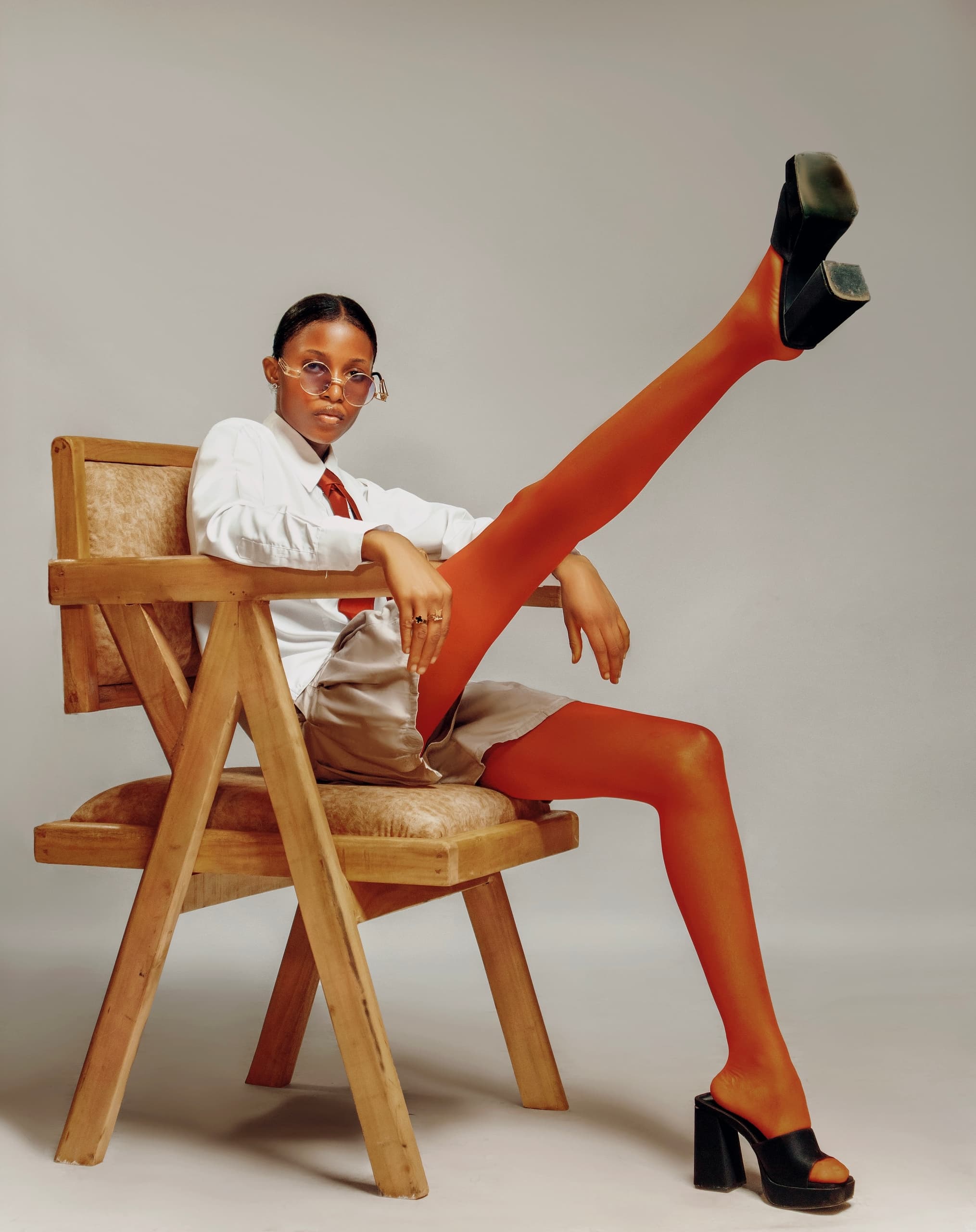
Choose a frame with clear authorship: purposeful light, decisive styling, controlled composition and a subject who feels present. Avoid beginning with a complicated group shot that requires decoding. The opener should make someone want the second image.
The final photograph matters too. It is the image left in the room after the portfolio closes. A strong ending can be quieter than the opener, but it should not feel like the folder simply ran out.
Show stories, not accidents
One extraordinary photograph can be luck. Three related photographs show that you can build and sustain an editorial idea.
Include short sequences from your best stories. Let the editor see how you move from wide frame to portrait to detail. This demonstrates more than aesthetic taste; it shows production thinking, consistency and an understanding of layout.
Do not include eight photographs from the same shoot because you are proud of it. Three or four usually say more. Leave the near-duplicates in the contact sheet.
Make the clothes readable
Fashion photography can be mysterious, cinematic and strange. It still needs to understand the clothes.
That does not mean every frame must look like a catalogue. It means the garment, silhouette, texture or styling decision cannot be an afterthought. Ask whether the image gives the viewer enough information to understand why this look is in the story.
If dramatic lighting erases every fabric, or a pose hides the essential construction of the garment, the frame may be visually exciting but editorially unhelpful.
Edit out the photograph you have outgrown
Every photographer has an image that once changed everything. It brought attention, confidence or the first serious collaboration. Sometimes it stays in the portfolio long after the rest of the work has moved on.
History is not the same as relevance. If an old image lowers the standard or belongs to a different visual identity, thank it and take it out.
The portfolio should show where your work is going, not preserve every stage of how it arrived.
Protect the style people can recognise
Being recognisable does not mean repeating the same colour grade, pose or face. Style is the pattern beneath those things: the distance you prefer, the way you use space, the gestures you wait for, the tension between polish and accident, the kinds of beauty you return to.
Keep the images that strengthen that pattern. Remove competent work that could have been made by anyone. An editor should be able to move through different subjects and still feel the same author making decisions.
Sequence like a magazine
Good sequencing creates pace.
Avoid placing three visually dense images together. Move between scale, gesture and energy. A close beauty portrait can reset the eye after a wide location shot. A still frame can make the following movement feel faster.
Print small thumbnails or view the whole selection at once. The browser-by-browser experience hides repetition. A contact-sheet view makes it obvious when the same colour, crop or pose appears five times.
Credits are part of the work
An editorial submission is also a record of collaboration. Prepare complete, accurate credits for photography, styling, makeup, hair, models, designers and represented agencies where relevant.
Use consistent names and handles. Check spelling with the team before you send. If a garment credit is uncertain, resolve it before submission rather than asking an editor to repair the production after the fact.
Clear credits signal that you respect the people who helped make the images. Editors notice.
Prepare a clean submission package
Follow the publication’s requested file size, orientation, naming and delivery method. “I thought this looked better” is rarely a useful reason to ignore a submission guide.
A clean package usually includes:
- a concise title and one- or two-sentence concept;
- the edited series in deliberate order;
- complete team and wardrobe credits;
- portfolio and social links;
- contact details for one responsible person;
- confirmation that the work is unpublished, if the publication requires exclusivity.
Do not make the editor hunt across three messages for the final credits.
The ten-image test
If your portfolio feels too long, choose the ten images you would be willing to defend in a room of people whose taste you respect.
Now look for gaps. Do the images show more than one distance? Can you direct a subject? Can you photograph fabric, skin and space? Is there evidence of collaboration? Does the work feel like the same person made it without becoming repetitive?
Add only when an image answers a question the ten do not.
The goal is not to appear endlessly productive. It is to appear ready.
When the edit is finished, read Marika’s submission page and choose the route that fits your project. For a sense of the publication’s visual range, browse the Webitorial archive.